

5 Best Cult Classic Movies Streaming On Netflix Right Now
What is a "cult classic" anyway? The generally accepted definition is a film that wasn't a success during its release, but has since developed a following among critics and audience members. That umbrella explanation applies to a diverse array of titles: limited-release indies like Richard Linklater's "Slacker" or the recent "Splitsville"; undefinable cinematic visions like those by David Lynch or Yorgos Lanthimos; so-bad-it's-good experiences (see "The Room" or "Cats"); and countless films that possess combinations of those criteria.
In the past, viewers went to repertory theaters or museums or stayed up late to catch broadcasts of their favorite cult classics. Today, they're available 24/7 on any number of streaming platforms, including Netflix. Though largely devoted to new and popular movies and series, Netflix also has its share of cult favorites in its library. We picked five of the most enduring movies currently playing on the streamer and ranked them according to their Rotten Tomatoes percentages. The mix here covers several decades and genres; in short, there's something here for almost every type of cult fan.
5. Dune (1984)
- Cast: Kyle MacLachlan, Francesca Annis, Virginia Madsen
- Director: David Lynch
- Year: 1984
- Rating: PG-13
- Runtime: 137 minutes
- Rotten Tomatoes: 36%
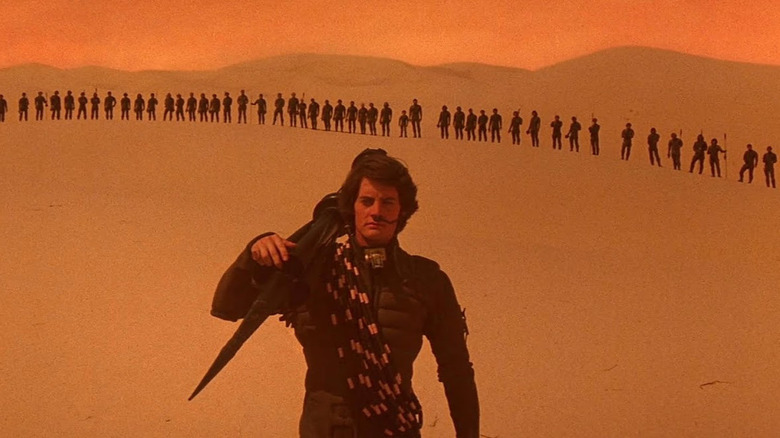
Baffled. That's how most moviegoers and reviewers felt about David Lynch's adaptation of Frank Herbert's "Dune." Roger Ebert essentially threw up his hands, noting, "This movie is a real mess, an incomprehensible, ugly, unstructured, pointless excursion into the murkier realms of one of the most confusing screenplays of all time." Virtually every aspect was raked over the coals, from Kyle MacLachlan's performance as Paul Atreides to special effects designer Carlo Rambaldi's sandworms to the score by Toto, and so on. A troubled production from start to finish that its director later regretted, David Lynch's "Dune" bombed at the box office, earning just $31 million worldwide on a estimated $42 million budget.
Time hasn't improved most critical takes on Lynch's "Dune"; the film has a dismal 36% score on Rotten Tomatoes. But it's also found a small but supportive fanbase over the decades, who've respond to the director's blend of lavish yet grotesque visuals and its extraordinary cast. "'Dune' is ripe for cult adoration," wrote Deep Focus Review, and the faithful has been rewarded in various ways, including a line of Funko figures and a lavish 4K UHD presentation by Arrow Video.
4. The Paperboy
- Cast: Matthew McConaughey, Nicole Kidman, John Cusack
- Director: Lee Daniels
- Year: 2012
- Rating: R
- Runtime: 107 minutes
- Rotten Tomatoes: 45%
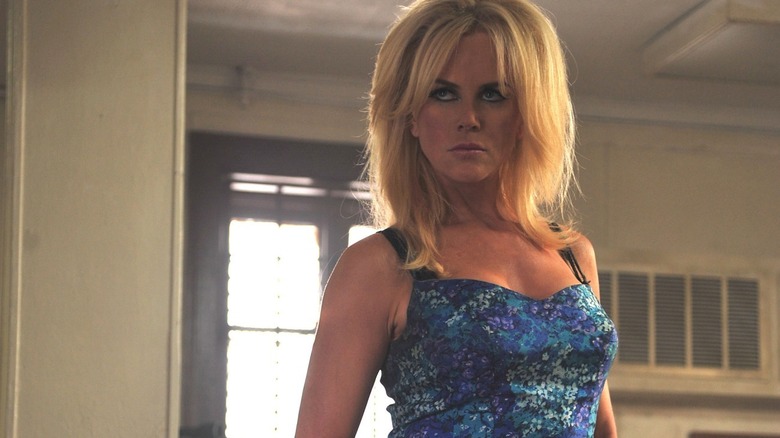
Critics didn't just dislike Lee Daniels' "The Paperboy" — they loathed it. "It's easily the worst movie of the year, and, given its budget and high-profile cast, will likely be counted among the worst movies ever made," wrote Film Comment. The film's chief offense, it seems, was to showcase an A-list cast including Nicole Kidman in one of her worst movies, Matthew McConaughey, Zac Efron, and John Cusack in baffling and grotesque scenes: Kidman urinating on a jellyfish-stung Efron, McConaughey hog-tied and assaulted, and Efron in tight underwear for long stretches of time.
Most audiences stayed away as well. "The Paperboy" netted less than $4 million on a $12.5 million budget — a significant comedown for Daniels, who earned Oscar nods three years earlier for "Precious." But a select few also found "The Paperboy" weirdly compelling and watchable, albeit as a trainwreck. Comparisons to John Waters' oeuvre were frequent, while the New York Times perfectly summed up its curious allure: "A hot mess like this, even if it makes you dizzy and a little queasy, is a rarer phenomenon, worth seeking out if only so you can say you saw it with your own eyes."
3. Monty Python's The Meaning of Life
- Cast: John Cleese, Eric Idle, Terry Gilliam
- Director: Terry Jones
- Year: 1983
- Rating: R
- Runtime: 107 minutes
- Rotten Tomatoes: 86%
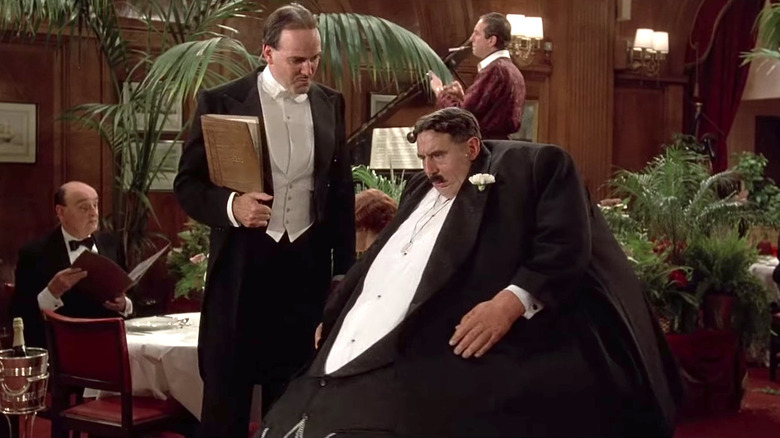
Monty Python's Flying Circus was not known for sparing sacred cows, but "The Meaning of Life" took a slaughterhouse approach to standards for subject matter and good taste. Among its sketches: A money-strapped father informs his children that they will be sold for scientific experiments after losing his job; nuns perform a musical number about contraception; paramedics remove an organ donor's liver while he's still alive; and an enormously corpulent man refuses to stop eating until he explodes. Death eventually arrives to take a dinner party to heaven, which is revealed to be a tacky nightclub.
The final film to feature all six original members of Monty Python, "Life" doesn't enjoy the same appreciation as their previous movies, like "Monty Python and the Holy Grail" or "Monty Python's Life of Brian." Despite starting life as a sketch series, critics were divided over the film's sketch format. "The last hurrah from the Monty Python team is seen as a lesser accomplishment ... too piecemeal and unfocused, but it possesses some of their most iconic musings and inspired madness," stated Empire Magazine. Though a minor hit during its release, "Life" is also one of the Pythons' most celebrated films, winning the Grand Jury Prize at the 1983 Cannes Film Festival.
2. Green Room
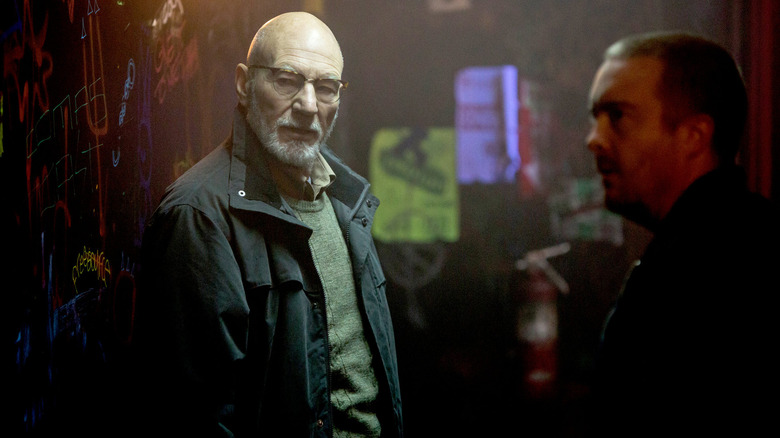
- Cast: Anton Yelchin, Patrick Stewart
- Director: Jeremy Saulnier
- Year: 2015
- Rating: R
- Runtime: 94 minutes
- Rotten Tomatoes: 90%
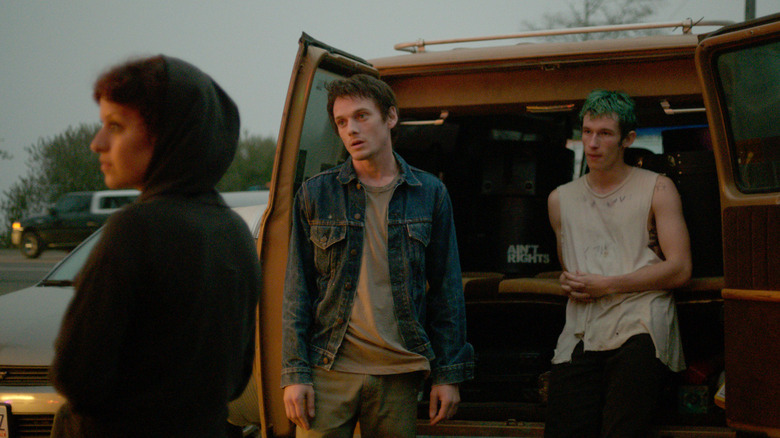
For the scrappy punk band the Ain't Rights, things go wrong almost immediately. After surviving a last-minute opening gig at a remote Oregon bar that turns out to be a Nazi skinhead stronghold, a girl is found dead backstage, and the band must fight for their lives. Unfortunately, their opponents, led by an unnervingly calm Patrick Stewart, are prepared for battle.
A tense and shockingly violent thriller from writer/director Jeremy Saulnier (who directed one of Netflix's best original films, "Rebel Ridge"), "Green Room" reads like pure B-movie heaven. It's essentially "Assault on Precinct 13," but with jittery punks Anton Yelchin in one of his last film roles prior to the "Star Trek" actor's tragic death, Alia Shawkat, and Callum Turner in place of the cops. As with John Carpenter's film, putting ordinary people in a do-or-die situation lends depth and humanity to the exploitation trappings.
The Ain't Rights aren't superheroes, and must make tough choices and commit horrible acts to survive. Their pain and terror feel real, and as a result, "Green Room" is far more gripping than the usual shoot-em-up. "The movie is wound as tight as a steel coil," wrote the culture blog Pajiba. "Yet despite that, it finds the space to breathe, to give the tension its counterpoint, thus enhancing its power exponentially."
1. Night of the Living Dead (1968)
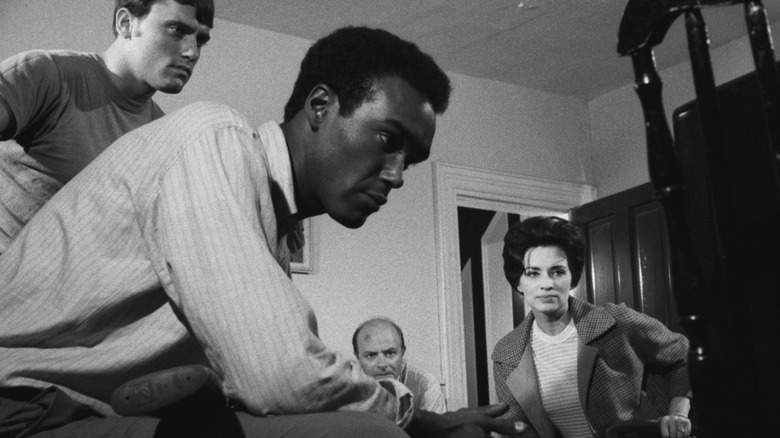
- Cast: Duane Jones, Judith O'Dea, Karl Hardman
- Director: George A. Romero
- Year: 1968
- Rating: Not rated
- Runtime: 96 minutes
- Rotten Tomatoes: 95%
Few films have wielded as much influence over the horror genre as George A. Romero's "Night of the Living Dead." A regionally-lensed, black-and-white feature made by a commercial production company, "Night" reshaped horror tropes by trading gothic trappings for a semi-documentary approach, with everyday Americans facing an inexplicable, unstoppable nightmare. Its monsters are indistinguishable from the heroes, save for the fact that they are dead and hunger for human flesh.
Most harrowing of all, "Night" inverts the catharsis that fuels so much horror. The hero doesn't save the day, the survivors don't pull together, and the sun rises on a pile of burning bodies. Long before the bleak endings of "The Wicker Man," "The Mist," or "The Blair Witch Project," Romero's film showed us the worst: Nothing is safe or sacred.
"Night of the Living Dead" was a financial success, but was also crucified by critics for its shocking violence. However, by the 1970s "Night" was hailed as an uncompromising vision. More importantly, it paved the way for not only other independent horror, but also for more graphic screen gore and the zombie subgenre as a whole. A staple of best-of lists (horror or otherwise), it was added to the National Film Registry in 1999.