

Is There A Post-Credits Scene In The Super Mario Galaxy Movie?
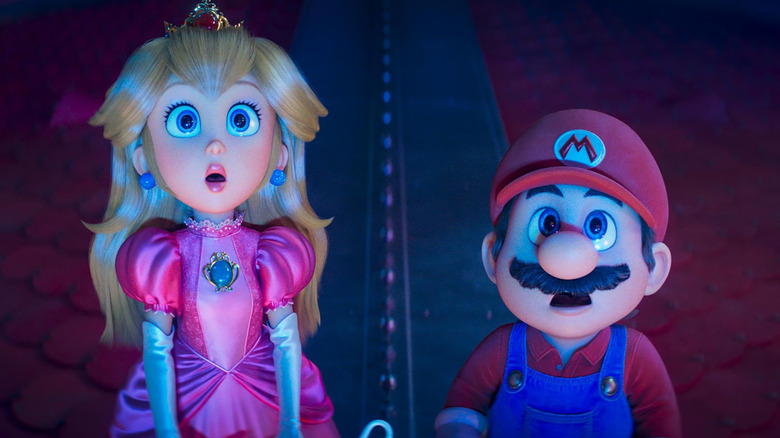
Contains spoilers for "The Super Mario Galaxy Movie"
"The Super Mario Galaxy Movie" smashes together many different eras of Mario's video game lore. While the Nintendo Wii "Super Mario Galaxy" games are heavily drawn upon, all corners of this plumber's exploits are delved into within the film. The deluge of callbacks even continues into the end credits, which feature two scenes.
For many, the post-credit scenes are the best part of franchises like the MCU and these "Mario Galaxy Movie" nuggets are bound to inspire similar enthusiasm from die-hard Mario fans. Granted, neither of these sequences are destined to register among the best end credits scenes ever. For many audience members, though, they'll be enough to produce two further pops of joy before exiting the auditorium.
Essentially functioning as nods to this saga's past and future, "The Super Mario Galaxy Movie's" end credit scenes cover a lot of ground. What happens in these scenes? What significance do they have for the larger franchise? Let's delve into those questions and more by breaking down "Super Mario Galaxy's" credit sequences.
The Bowsers suffer in jail
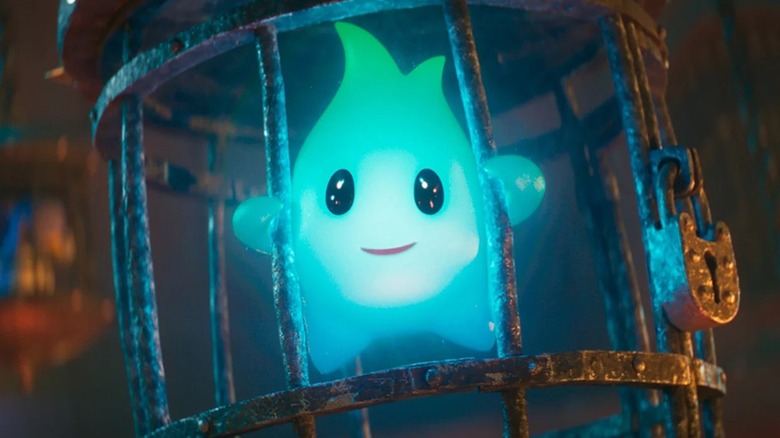
The first of "The Super Mario Galaxy Movie's" two credit scenes begins with Fox McCloud (Glen Powell) and Toad (Keegan-Michael Key) exiting a multi-story jail on a snowy planet. The former informs Toad that Princess Rosalina (Brie Larson) finally fixed his warp drive, allowing him to return to his universe. After McCloud's ship takes off, we meet Dry Bowser (Jack Black) and Bowser Jr. (Benny Safdie) stuck in the same prison cell. The latter adversary is frantically digging a hole and reassuring his papa (still a pile of disconnected, albeit sentient, bones) that they'll be free.
They halt as an approaching prison guard clanks their nightstick against the bars of other jail cells. The guard is revealed to be Lumalee (Juliet Jelenic), the deeply existential blue Luma previously kept caged in "The Super Mario Bros. Movie." Now, the shoe is on the other foot as Lumalee torments the duo with ominous dialogue about death being around the corner.
Despite Bowser's protests, Lumalee keeps on yammering about finite mortality with creepily upbeat nonchalance, and the movie cuts to black as the Bowsers scream in terror. These villains will clearly return in future "Mario" movies, but not without scars from their jail time exploits.
A final royal cameo
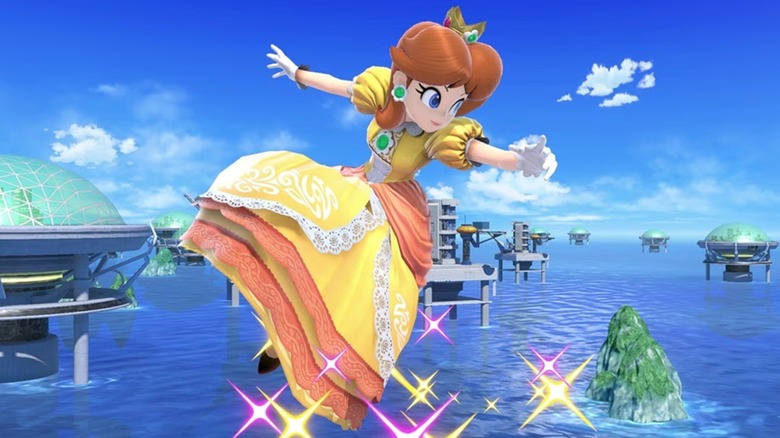
The final "Super Mario Galaxy Movie" post credits scene returns to Gateway Galaxy, where a Ukiki that previously stole Princess Peach (Anya Taylor-Joy) and Toad's items pulls the same trick on a random Whittle. Suddenly, a daintily clothed hand emerges from off-screen to punch the Ukiki to the ground unconscious. The Whittle retrieves their items and gratefully remarks "Thank you ... your highness." We then get our first reveal of Princess Daisy, who produces a small smile before the scene draws to a close.
Much like how the ending of "The Super Mario Bros. Movie" teased Yoshi's eventual arrival into this franchise, "The Super Mario Galaxy Movie" dedicated its last sequence to setting up the film debut of another Mario video game legend. It was inevitable that Daisy would appear in Illumination's Mario exploits given the character's numerous game appearances since her debut in 1989's "Super Mario Land." Heck, this isn't even Daisy's first time in a theatrical movie, since she was the female lead of 1993's "Super Mario Bros," where she was played by Samantha Mathis.
This glimpse into the franchise's future, though, still leaves one big question mark. Given that she's entirely silent in this segment, it's unclear what she'll sound like. Given this series' casting tendencies, don't be surprised if either Sydney Sweeney or Florence Pugh takes the role.